A rice cooker is an invaluable kitchen appliance, simplifying the process of creating perfectly cooked rice. However, like any kitchen tool, it demands regular maintenance to continue performing at its best. Neglecting the inner lid and steam vent can lead to unhygienic conditions, lingering odors, and even affect the quality of your rice. Keeping these critical components spotless ensures that every grain is cooked to perfection, free from impurities and unwanted smells. This guide will walk you through the essential steps and best practices for thoroughly cleaning your rice cooker’s inner lid and vent, guaranteeing delicious results every time.
The Essential Role of a Clean Rice Cooker Lid and Vent
Regularly cleaning your rice cooker’s inner lid and steam vent is paramount for several reasons, extending far beyond mere aesthetics. Firstly, it’s crucial for maintaining hygiene and food safety. During the cooking process, steam carries starchy residues and food particles, which can accumulate on the inner lid and inside the vent. Over time, this buildup can become a breeding ground for bacteria and mold, compromising your food’s safety and potentially leading to unpleasant odors.
Moreover, proper cleaning directly impacts the quality of your cooked rice. A clogged or dirty vent can impair the cooker’s ability to release steam effectively, affecting pressure and temperature regulation. This can result in unevenly cooked, gummy, or dry rice. Neglecting these areas can also lead to blockages, causing the cooker to malfunction or even shorten its lifespan. Ensuring these parts are clean not only prevents issues like unpleasant smells but also safeguards the longevity and optimal performance of your appliance.
Understanding Your Rice Cooker’s Anatomy for Effective Cleaning
Before you begin cleaning, it’s essential to understand the specific design of your rice cooker, as models can vary significantly. Most rice cookers feature an inner lid and a steam vent, but their removability differs. Many modern rice cookers have inner lids and steam vents that are designed to be easily detachable, allowing for thorough cleaning. These removable parts can often be separated for washing. Other models, particularly older or more basic ones, may have non-removable inner lids and integrated vents, requiring a different cleaning approach.
It is always recommended to consult your rice cooker’s operating manual before attempting any disassembly or cleaning. The manual provides specific instructions on how to safely remove components, which parts are dishwasher-safe, and any precautions unique to your model. Familiarizing yourself with these details will ensure you clean your appliance effectively without causing damage.
Step-by-Step Guide: Cleaning Removable Inner Lids and Vent Parts
Cleaning rice cookers with removable inner lids and vent components is generally straightforward and allows for a more comprehensive clean. Follow these steps to ensure your removable parts are spotless:
- Safety First: Unplug and Cool Down: Always begin by unplugging your rice cooker from the power outlet and allowing it to cool down completely. This prevents accidental burns and electrical hazards.
- Gentle Disassembly of Detachable Components: Once cooled, carefully remove the inner pot, followed by the inner lid and any detachable steam vent components or caps. Some inner lids might require a gentle pull or a specific release mechanism, so refer to your manual if unsure.
- Washing Techniques: Wash these removable parts immediately after use to prevent residue from hardening. Use warm water and a mild dish soap. For the inner lid, a soft sponge or cloth is ideal to scrub away starch and food particles. For the steam vent, which often traps moisture and rice residue, a soft brush, cotton swab, or even a pipe cleaner can effectively clear out small crevices and ensure proper ventilation. Avoid abrasive scrubbers, steel wool, or metal tools, as these can scratch and damage surfaces, particularly non-stick coatings.
- Thorough Rinsing and Air-Drying: Rinse all cleaned parts thoroughly under running water to remove any soap residue. After rinsing, allow them to air dry completely on a drying rack, or wipe them with a clean, soft towel before reassembling. Ensuring all components are fully dry prevents moisture buildup, which can lead to odors or mold.
- Reassembly: Once everything is dry, carefully reassemble the inner lid and steam vent components back onto the rice cooker, ensuring they are securely in place.
Best Practices for Non-Removable Inner Lids and Integrated Vents
For rice cooker models with non-removable inner lids and integrated vents, the cleaning process requires a more cautious approach to avoid damaging electrical components.
- Safe Wiping Techniques: After unplugging and ensuring the cooker is cool, use a damp (not wet) cloth with a small amount of mild dish soap to wipe down the inner surface of the lid. Ensure the cloth is not dripping to prevent water from seeping into electrical parts.
- Targeting Crevices and Seals: For the integrated vent and any tight crevices or seals around the lid, a damp cotton swab or a soft, small brush can be effective in removing trapped rice particles and residue. Be gentle to avoid damaging seals, which are crucial for maintaining cooking pressure.
- Preventing Water Ingress: It is paramount never to immerse the entire rice cooker base in water. Always apply cleaning solutions to your cloth or cleaning tool, rather than directly to the appliance, to prevent any liquid from entering the internal components. After cleaning, wipe the surfaces with a clean, damp cloth to remove soap, and then thoroughly dry the area with a soft, dry cloth. Leave the lid open for some time to ensure complete air drying before storage.
> “The secret to consistently great rice isn’t just the cooker, it’s consistent cleaning. Especially that inner lid and steam vent – they’re often the culprits behind odd smells and sticky messes.” – Chef Anya Sharma, Culinary Appliance Expert
Recommended Cleaning Solutions and Tools for a Spotless Finish
Achieving a truly clean rice cooker involves using the right combination of solutions and tools:
- Mild Dish Soap and Soft Cloths/Sponges: For everyday cleaning, warm water and a gentle dish soap are highly effective. Always use a soft sponge or microfiber cloth to prevent scratches, particularly on non-stick surfaces.
- Specialized Brushes, Cotton Swabs, and Pipe Cleaners: These tools are invaluable for reaching and cleaning small, intricate areas like steam vent holes, seals, and hinges where rice residue can easily hide. A soft-bristle brush is particularly useful for dislodging trapped particles from the steam vent.
- Natural Remedies: Vinegar and Baking Soda:
- Vinegar Solution: For stubborn stains, mineral buildup, or persistent odors, a vinegar solution can work wonders. Boil a solution of one cup distilled white vinegar and one cup water in the inner pot (with the lid closed) in your rice cooker. After it boils, turn it off and let it cool completely before washing with soapy water. This method also helps to descale and disinfect.
- Baking Soda and Lemon Juice: For baked-on residue that’s difficult to scrub off, a paste of baking soda and a few drops of lemon juice can be applied. Let it bubble and soak for about 10 minutes before gently scrubbing and rinsing.
- Avoiding Harsh Chemicals: Never use abrasive cleaners, steel wool, or harsh chemicals like bleach, as these can damage the non-stick coating, etch surfaces, or leave behind harmful residues.
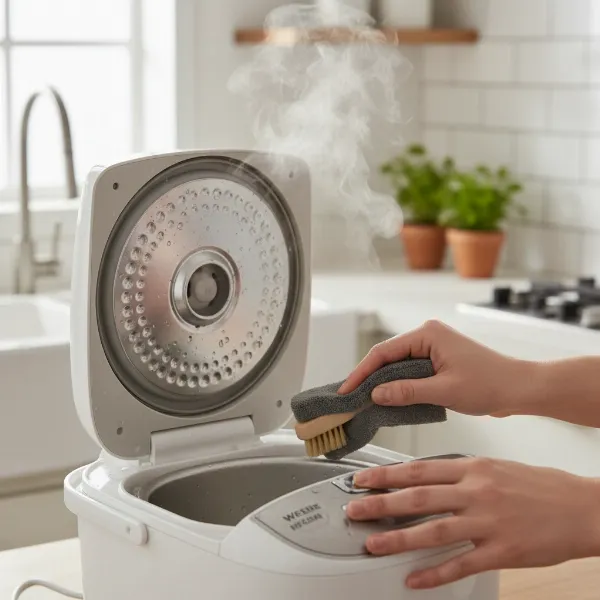 A person gently cleaning the inner lid and steam vent of a rice cooker with a soft brush and sponge.
Maintaining Your Rice Cooker: Frequency and Ongoing Care
Consistent cleaning is key to a long-lasting and high-performing rice cooker. How often you clean depends on usage, but certain guidelines ensure optimal maintenance:
- Daily Cleaning for Preventing Buildup: Ideally, the inner pot, removable lid, and steam vent should be cleaned after every use. This prevents rice starch and moisture from drying and hardening, making future cleaning much easier. A quick wash with warm, soapy water for removable parts and a wipe-down for non-removable sections will suffice.
- When to Perform a Deep Clean: A deep clean, involving the use of vinegar or baking soda solutions, is recommended weekly or bi-weekly, especially if you use your rice cooker frequently or notice any lingering odors or stubborn stains.
- Tips for Optimal Maintenance and Longevity:
- Always unplug and cool the cooker before cleaning.
- Ensure all parts are completely dry before reassembly or storage.
- Do not overfill the inner pot with water or rice, as this can lead to excessive steam and residue buildup in the lid and vent.
- Store your rice cooker in a clean, dry place with the lid slightly ajar to allow for air circulation, preventing musty odors.
Troubleshooting Common Cleaning Issues
Even with regular cleaning, you might encounter specific challenges. Here’s how to address them:
- Tackling Stubborn Stains and Burnt-On Residue: If rice has burnt onto the inner lid or vent, soak the removable parts in warm, soapy water for several hours or overnight. For non-removable lids, place a damp, hot cloth over the hardened area for 15-30 minutes to soften it before gently scrubbing. A mixture of baking soda and a little water can also create a gentle abrasive paste to help lift stubborn spots.
- Effective Methods for Eliminating Lingering Odors: Persistent odors often indicate bacterial growth or food particles trapped in hard-to-reach areas. The vinegar boil method is highly effective for deodorizing the entire inner chamber of your rice cooker. Alternatively, you can fill the inner pot with water and a few lemon slices, then run a short steam cycle. Afterward, clean all parts thoroughly and air dry. Leaving the lid open when not in use also helps dissipate odors.
- Preventing Mold and Mildew Growth: Mold thrives in moist, dark environments. To prevent it, always ensure all components, especially the lid and vent, are thoroughly dried after washing. If you store your rice cooker for extended periods, leave the lid slightly open to allow for airflow. If mold appears, clean with a vinegar solution, as vinegar is a natural disinfectant.
Conclusion
Maintaining a clean inner lid and steam vent is fundamental to the performance and longevity of your rice cooker. By consistently following these detailed cleaning practices—from understanding your cooker’s design to employing the right tools and solutions—you ensure that every batch of rice is perfectly cooked, hygienic, and free from undesirable odors. Remember the importance of regular care: a small effort after each use prevents larger cleaning challenges down the line and safeguards your appliance for years of delicious meals. So, take a moment to give your rice cooker the attention it deserves; your taste buds will thank you.
How often do you clean your rice cooker’s inner lid and vent, and what are your go-to cleaning tips?
Frequently Asked Questions
Why is it important to clean the inner lid and vent of my rice cooker?
Table is empty.Cleaning these parts is crucial for hygiene, food safety, and optimal cooking performance. Starchy residue and moisture can accumulate, leading to bacterial growth, mold, unpleasant odors, and can also impede proper steam release, affecting rice quality and potentially shortening your cooker’s lifespan.
Can I put my rice cooker’s inner lid or vent in the dishwasher?
Many removable inner lids and steam vents are dishwasher-safe, but it’s essential to always check your specific rice cooker’s operating manual for confirmation. Some materials or components may not withstand the high heat of a dishwasher.
How often should I clean my rice cooker’s lid and vent?
Ideally, the inner lid and removable vent parts should be cleaned after every use to prevent residue buildup. A deep clean, especially with a vinegar solution for odors or stains, is recommended weekly or monthly, depending on how frequently you use the appliance.
What should I do if my rice cooker has a persistent odor?
A persistent odor often indicates trapped food particles or mold. Try the “vinegar boil” method: fill the inner pot with a solution of equal parts water and white vinegar, close the lid, and run a steam cycle. Let it cool, then clean all parts thoroughly.
Are abrasive cleaners safe for cleaning rice cooker parts?
No, abrasive cleaners, steel wool, or harsh chemicals like bleach are not safe for cleaning Rice Cooker parts. They can scratch non-stick coatings, damage surfaces, and leave harmful residues. Always opt for mild dish soap, soft sponges, or natural solutions like vinegar and baking soda.