Craving that comforting bowl of creamy mac and cheese but dreading the multiple pots and constant stirring? Imagine a world where your favorite cheesy pasta comes together effortlessly, cooked to perfection in a single appliance with minimal fuss. That world is here, thanks to the humble rice cooker. This guide will walk you through transforming simple ingredients into a rich, decadent mac and cheese, proving that gourmet flavors don’t always require complicated techniques. Get ready to discover the ultimate hands-off method for homemade macaroni and cheese.
The Unexpected Convenience of Rice Cooker Mac and Cheese
The rice cooker, often pigeonholed for its primary function, is a secret weapon for busy cooks and those living in small spaces. When it comes to mac and cheese, its benefits are numerous. Primarily, it’s a monumental time-saver. Forget boiling water in one pot and whisking cheese sauce in another; the rice cooker handles both the pasta cooking and the sauce-making in a single pot. This “set it and forget it” approach significantly reduces active cooking time, freeing you up to attend to other tasks.
Furthermore, the single-pot method drastically simplifies cleanup, making it ideal for weeknight dinners, dorm room cooking, or even camping trips with an electrical hookup. The consistent, gentle heat of a rice cooker helps prevent sticking and ensures even cooking, yielding wonderfully creamy results without constant monitoring. It’s a game-changer for anyone seeking a delicious, homemade meal with minimal effort.
Essential Ingredients for Your Rice Cooker Mac and Cheese
Crafting the perfect rice cooker mac and cheese begins with selecting the right components. While the method is simple, quality ingredients elevate the dish from good to unforgettable.
- Pasta: Elbow macaroni is the traditional choice for mac and cheese, and it works wonderfully in a rice cooker. Its small, curved shape holds the creamy sauce beautifully. However, don’t limit yourself; small shells, rotini, or penne pasta can also be excellent alternatives, provided they are small enough to cook evenly.
- Liquid Base: This is crucial for both cooking the pasta and creating a rich sauce. A blend of milk (whole milk is recommended for maximum creaminess) and chicken or vegetable stock (or even water with bouillon) provides the ideal environment. The starch from the pasta will naturally thicken the liquid, contributing to the luxurious texture. Consider adding a touch of evaporated milk for an extra layer of velvety richness.
- Cheese: The soul of mac and cheese! A blend is often key for complex flavor and superior melt. Classic sharp cheddar provides a robust, tangy base, while a softer melting cheese like Monterey Jack or Gruyere adds a smooth, gooey texture. For an impressive cheese pull and a mild, creamy note, a touch of shredded mozzarella can be incorporated. Grate your own cheese from blocks for the best melting performance and flavor, avoiding pre-shredded varieties that often contain anti-caking agents.
- Flavor Boosters: Simple seasonings can make a big difference. Butter adds richness and a silky mouthfeel. Salt and freshly ground black pepper are fundamental. Garlic powder and onion powder introduce savory depth without chunks. A pinch of cayenne pepper can add a subtle warmth without making the dish spicy, enhancing the overall flavor profile.
- Optional Add-ins: Get creative! A spoonful of Dijon mustard can deepen the cheesy flavor. For added nutrition and color, finely chopped steamed broccoli, peas, or even pureed butternut squash can be stirred in during the second cooking phase.
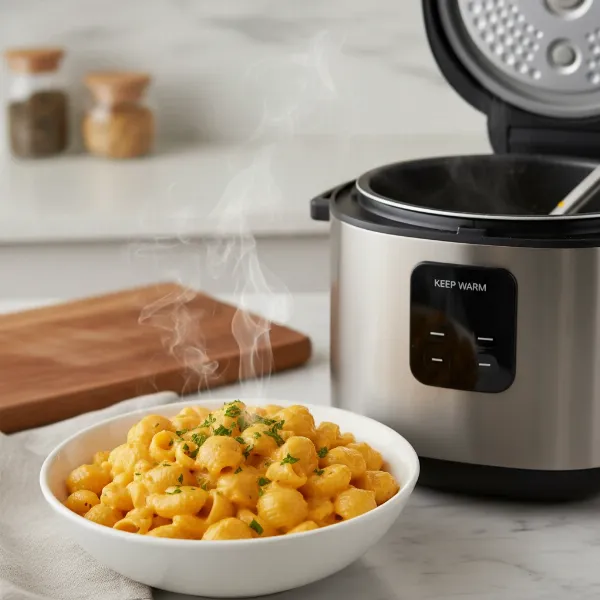 A bowl of perfectly cooked, creamy mac and cheese made in a rice cooker, ready to serve.
Step-by-Step Guide: Crafting Your Rice Cooker Mac and Cheese
Making mac and cheese in a rice cooker is surprisingly straightforward. Follow these steps for a delicious, one-pot meal.
Preparation
Table is empty.Start by gathering all your ingredients and measuring them accurately. Having everything prepped before you begin ensures a smooth cooking process. Grate your cheeses, measure your liquids, and have your pasta ready. This dish is about ease, so minimize last-minute scrambling.
Cooking Process
The magic happens in two distinct phases within your rice cooker.
Phase 1: Cooking the Pasta
- Combine Ingredients: In the inner pot of your rice cooker, add your uncooked macaroni (or chosen pasta shape), chicken or vegetable stock, and a portion of your milk. Many recipes recommend a 1:1:1 ratio of pasta to milk to stock for initial cooking. For example, 1 cup of macaroni, 1 cup of milk, and 1 cup of stock work well for about 2 servings.
- Initial Stir: Give the ingredients a good stir to ensure the pasta is fully submerged and to prevent it from clumping or sticking to the bottom during the initial cooking.
- Set and Cook: Close the lid of your rice cooker. Select the “White Rice” or “Regular Cook” setting. Some advanced rice cookers may have a “Porridge” or “Slow Cook” setting that could also work, but the standard rice function is generally reliable.
- First Cook Interval: Allow the pasta to cook for approximately 15-20 minutes. Cooking times can vary based on your rice cooker model and the type of pasta. Around the 15-minute mark, open the lid and stir thoroughly to prevent sticking and check for doneness. The pasta should be mostly cooked but still slightly firm (al dente) and there should be some liquid remaining. If it’s too firm, close the lid and continue cooking for a few more minutes, checking frequently.
Phase 2: Achieving Creaminess
- Add Dairy and Cheese: Once the pasta reaches al dente, open the lid. While the rice cooker is still on (or on its “Keep Warm” setting if the cook cycle has finished), add your shredded cheeses, butter, and any remaining milk or evaporated milk. Now is also the time to add your seasonings like salt, pepper, garlic powder, and a pinch of cayenne.
- Stir to Melt: Continuously stir the mixture with a non-abrasive spatula or spoon. The residual heat from the rice cooker and the hot pasta will quickly melt the cheese. Keep stirring until the cheese is completely melted and the sauce becomes smooth, creamy, and coats the pasta beautifully. This typically takes about 5-10 minutes.
- Taste and Adjust: Once the cheese is melted and incorporated, taste your mac and cheese. Adjust seasonings as needed. If the sauce is too thick, stir in a splash more milk or even water until it reaches your desired consistency.
Serving Suggestions
Serve your rice cooker mac and cheese immediately while it’s hot and wonderfully creamy. Garnish with a sprinkle of fresh chives, parsley, or a dash of paprika for color. For extra texture, consider a topping of toasted breadcrumbs. A dash of your favorite hot sauce can also add a delightful kick.
Tips for the Perfect Rice Cooker Mac and Cheese
Even with a straightforward method, a few expert tips can elevate your rice cooker mac and cheese from good to exceptional.
- Preventing Sticking: The starch from pasta can sometimes cause it to stick to the bottom of the rice cooker pot. A good stir within the first 5-7 minutes of the initial cook, and again halfway through, can significantly reduce this. Some cooks also lightly grease the inner pot with butter or oil before adding ingredients.
- Achieving Optimal Creaminess: The ratio of liquid to pasta is key. If your mac and cheese ends up too thick, simply stir in an extra splash of warm milk (or even water) until it reaches your preferred consistency. Conversely, if it’s too soupy, continue stirring on the “Keep Warm” setting for a few extra minutes to allow more liquid to evaporate and the sauce to thicken.
- Cheese Choice Matters: While any cheese will melt, a thoughtful blend yields the best results. Combining a sharp, flavorful cheese (like aged cheddar) with a good melting cheese (like Monterey Jack or Gouda) creates a balanced, rich, and stretchy sauce. Avoid pre-shredded cheeses if possible, as they often contain starches that can make the sauce gritty.
- Adjusting Cook Time: All rice cookers are not created equal. Some run hotter or have different programming. The first time you make this dish, monitor the pasta closely, especially during the initial cooking phase. Once you know how your specific rice cooker performs, you can confidently stick to those timings.
- Seasoning to Taste: Don’t underestimate the power of tasting. Salt content in bouillon and cheese can vary, so always taste the finished product before serving and adjust salt, pepper, or other seasonings to your preference.
- Reheating: Leftover mac and cheese can be delicious, but it often thickens significantly in the refrigerator. To revive its creamy texture when reheating (either on the stovetop, microwave, or back in the rice cooker’s “Keep Warm” setting), stir in a tablespoon or two of milk or water until it’s smooth and creamy again.
Troubleshooting Common Rice Cooker Mac and Cheese Issues
Even seasoned cooks encounter occasional hiccups. Here’s how to address common problems when making mac and cheese in your rice cooker.
- Pasta too Hard or Mushy:
- Hard: The pasta needs more cooking time or more liquid. Add a bit more hot stock or water, stir, and cook for another 5-10 minutes, checking frequently.
- Mushy: The pasta was cooked for too long or with too much liquid. Next time, reduce the initial cooking time slightly and be precise with your liquid measurements. Unfortunately, there’s no going back from mushy pasta, so adjust for your next batch.
- Sauce too Thin or Thick:
- Thin: If the sauce is too watery, allow it to simmer longer on the “Keep Warm” setting, stirring occasionally, until it thickens. The starch from the pasta will continue to release and bind the liquid.
- Thick: If the sauce is too dense or clumpy, gradually stir in a tablespoon at a time of warm milk or stock until it reaches your desired consistency.
- Cheese Not Melting Evenly/Clumpy:
- Ensure your cheese is freshly shredded. Pre-shredded cheeses often contain cellulose, which can prevent smooth melting.
- Add cheese when the pasta is still hot, and stir continuously until completely incorporated. If the rice cooker has switched to “Keep Warm,” the residual heat should still be sufficient.
- Sticking to the Bottom:
- This is often due to insufficient liquid or lack of stirring. Ensure pasta is fully submerged initially. Stir well after the first 5-7 minutes of cooking to dislodge any pasta that might be adhering to the pot. Using a non-stick rice cooker pot and a plastic or wooden spatula also helps.
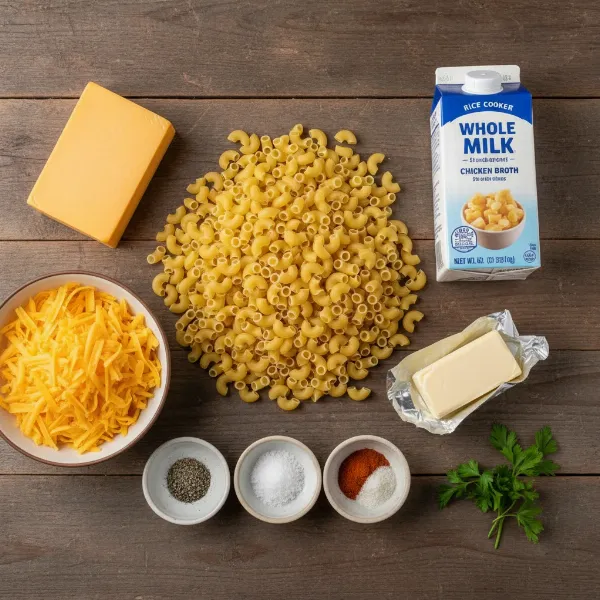 Ingredients for making mac and cheese in a rice cooker, including pasta, cheese, and milk.
Frequently Asked Questions
Can I use any type of rice cooker for mac and cheese?
Yes, most standard rice cookers with a “White Rice” or “Regular Cook” setting will work perfectly. Advanced models with different cooking functions can also be adapted, but the basic cook cycle is usually sufficient.
Do I need to pre-cook the pasta before putting it in the rice cooker?
No, that’s one of the main advantages of this method! You add dry, uncooked pasta directly to the rice cooker with your liquids. The rice cooker handles all the cooking in one go.
What’s the best cheese blend for rice cooker mac and cheese?
For a balanced flavor and creamy texture, a blend of sharp cheddar for tang and flavor, along with Monterey Jack or Gruyere for meltiness and stretch, is highly recommended. You can also add a touch of cream cheese for extra richness.
How do I store and reheat leftover rice cooker mac and cheese?
Store leftovers in an airtight container in the refrigerator for up to 3-4 days. When reheating, the mac and cheese will likely be very thick. Add a splash of milk or water (about 1-2 tablespoons per serving) and stir it in while reheating on the stovetop, in the microwave, or back in the rice cooker’s “Keep Warm” setting until it becomes creamy again.
Can I add meat or vegetables to my rice cooker mac and cheese?
Absolutely! For a more complete meal, you can stir in cooked chopped ham, bacon, or shredded chicken during the second cooking phase. For vegetables, finely chopped or small florets of broccoli, peas, or spinach can be added during the initial pasta cooking, or closer to the end for more tender-crisp results.
Conclusion
Making mac and cheese in a rice cooker is more than just a kitchen hack; it’s a testament to the versatility and convenience of modern appliances. This one-pot method delivers all the creamy, cheesy comfort you crave with significantly less effort and cleanup than traditional stovetop or baked recipes. By understanding the simple steps, choosing quality ingredients, and employing a few smart tips, you can consistently achieve perfect results.
So, ditch the multiple pots and endless stirring. Embrace the ease of your rice cooker to create a homemade mac and cheese that’s rich, satisfying, and utterly delicious. What culinary delights will you unlock with your Rice Cooker next?