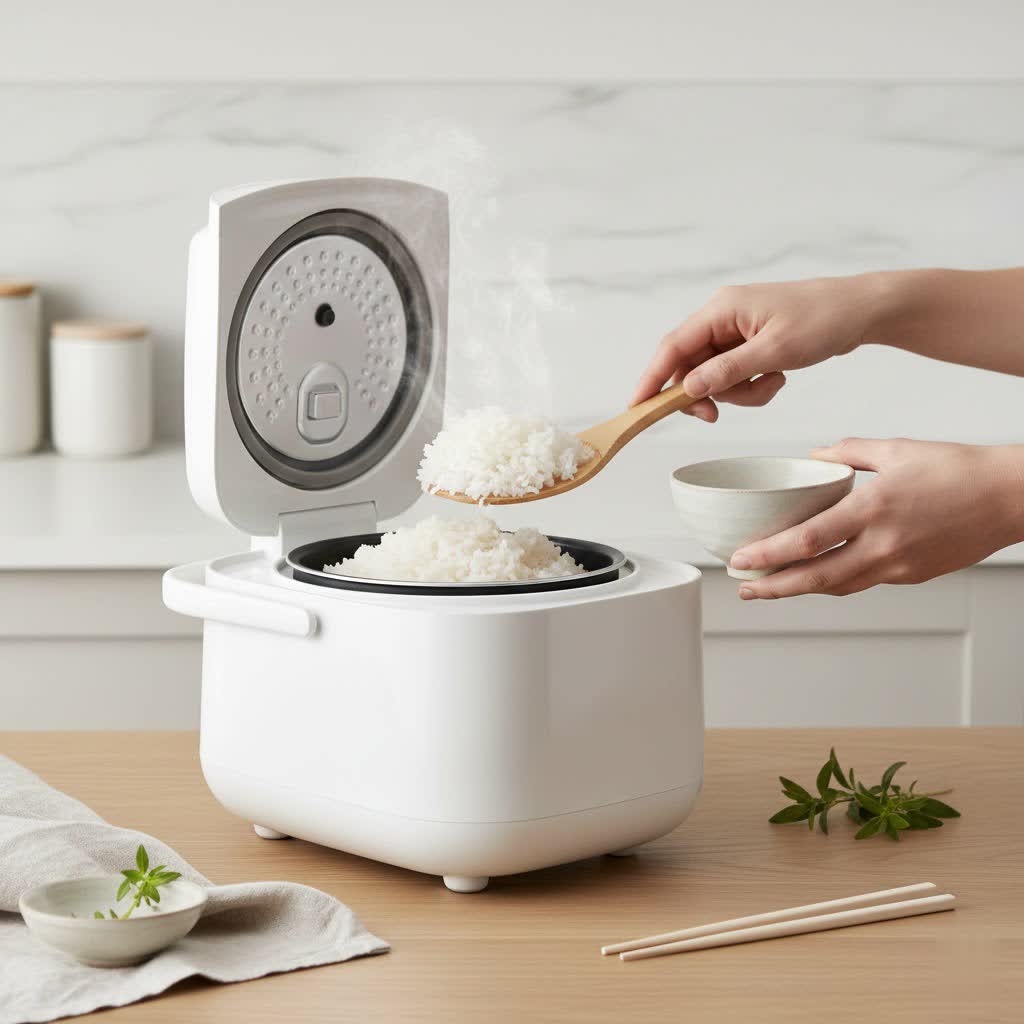
Transforming your meal preparation can be as simple as leveraging a single kitchen appliance for multiple tasks. For many, the humble rice cooker is a staple, but its capabilities extend far beyond perfectly cooked grains. Imagine preparing fluffy rice and vibrant, tender-crisp vegetables simultaneously, all in one go. This technique not only streamlines your cooking process but also locks in nutrients and flavors, making healthy eating effortlessly convenient.
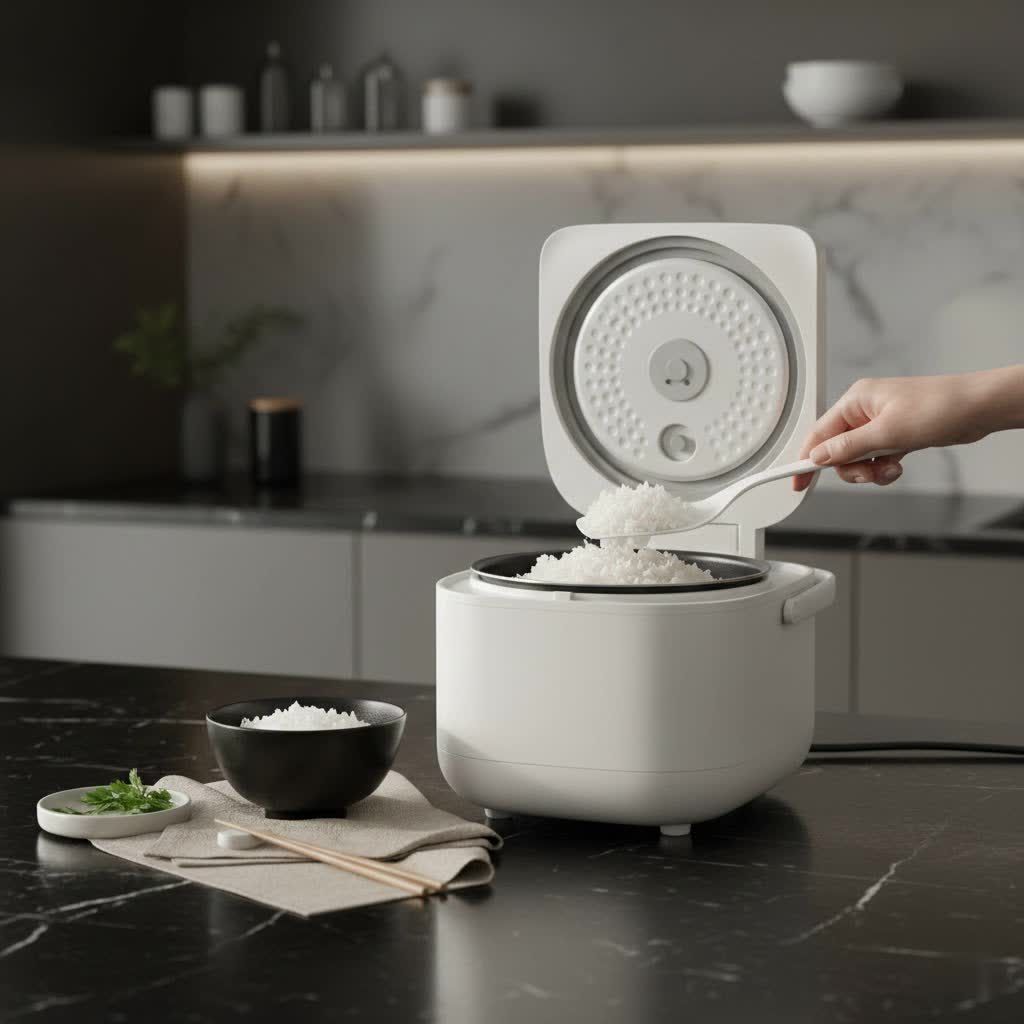
This comprehensive guide will walk you through the simple steps to effectively steam vegetables while your rice cooks, turning a basic side into a complete, nutritious meal with minimal effort and cleanup.
Why Steam Vegetables with Your Rice?
Integrating vegetables into your rice cooking offers a multitude of benefits that extend beyond mere convenience. It’s a smart approach to healthier, more efficient meal preparation.
Efficiency in the Kitchen: This method is a true time-saver. By cooking two components of your meal at once, you drastically cut down on active cooking time and significantly reduce the number of pots and pans to wash afterwards. It frees up your stovetop for other dishes, making multi-tasking in the kitchen a breeze.
Preserved Nutritional Value: Steaming is widely recognized as one of the healthiest cooking methods. Unlike boiling, which can leach water-soluble vitamins and minerals from vegetables, steaming retains more of these essential nutrients. The gentle, moist heat helps vegetables maintain their vibrant colors, firm texture, and natural flavors.
Enhanced Flavor and Texture: Steamed vegetables emerge bright, tender-crisp, and full of their inherent sweetness, without being waterlogged or overly softened. When cooked alongside rice, they can also subtly infuse the grains with their aromas, adding an extra layer of flavor to your meal.
Unmatched Convenience: Rice cookers provide a consistent, hands-off cooking environment. Once set, you can attend to other tasks without worrying about stirring or monitoring, confident that both your rice and vegetables will cook perfectly.
Essential Equipment for Simultaneous Steaming
To successfully steam vegetables while cooking rice, you’ll need a few key pieces of equipment. Most rice cookers come with the necessary accessories, but understanding your options can help you achieve the best results.
Rice Cooker Types:
- Basic Rice Cookers: These typically have simple “cook” and “warm” functions. They work perfectly for steaming, often coming with a basic plastic or metal steamer tray.
- Advanced Rice Cookers: Many modern rice cookers feature dedicated “steam” functions with timers, as well as multiple settings for different rice types. These offer greater precision for vegetable steaming.
Steamer Baskets: The most crucial accessory is a steamer basket or tray.
- Built-in Steamer Trays: Many rice cookers include a perforated plastic or metal tray designed to sit above the cooking rice, allowing steam to circulate.
- Stainless Steel “Flower Petal” Baskets: These collapsible baskets are versatile and can fit into various pot sizes. Their adjustable design makes them ideal for rice cooker use if your model doesn’t include a built-in tray.
- Bamboo Steamers: While traditionally used with woks, smaller bamboo steamers can sometimes be adapted for use with larger rice cooker pots, provided they fit snugly above the water level without touching the rice.
Choosing the Right Basket: Ensure your steamer basket fits securely within your rice cooker’s inner pot, elevated enough so it doesn’t submerge into the cooking water or rice. It should allow the lid to close completely to trap steam effectively.
Step-by-Step Guide: Steaming Vegetables in a Rice Cooker
Steaming vegetables alongside your rice is a straightforward process. Follow these steps for a perfectly cooked, wholesome meal.
Preparation is Key
Table is empty.First, prepare your ingredients. Wash your chosen rice thoroughly under cold water until the water runs clear. This removes excess starch, leading to fluffier rice. Wash your vegetables and cut them into uniform, bite-sized pieces. Uniformity ensures even cooking, which is crucial when steaming different types of vegetables together.
Method 1: Using a Steamer Basket (Recommended)
This is the most common and versatile method for simultaneous cooking.
- Add Rice and Water: Place your measured, rinsed rice into the inner pot of your rice cooker. Add the appropriate amount of water according to your rice cooker’s instructions or the rice type you are using. For most white rice, this is typically a 1:1 or 1:1.25 ratio of rice to water.
- Insert Steamer Basket: Carefully place the steamer basket or tray on top of the inner pot, ensuring it sits above the water level and does not touch the rice.
- Arrange Vegetables: Distribute your prepared vegetables in a single layer within the steamer basket. Avoid overcrowding, as this can hinder steam circulation and lead to uneven cooking. For a mix of vegetables, place harder, longer-cooking vegetables (like carrots or potatoes) at the bottom or along the edges, and quicker-cooking ones (like broccoli florets or peas) on top.
- Cook: Close the rice cooker lid securely. Select the “cook” or “white rice” setting. If your rice cooker has a dedicated “steam” function, you can use this in conjunction with the rice cycle if possible. The steam generated from the cooking rice will cook your vegetables.
- Timing Vegetables: Most vegetables will steam to perfection in 5 to 15 minutes. For vegetables that cook quickly, you might want to add them to the steamer basket during the last 5-10 minutes of the rice cooking cycle to prevent overcooking. Hardier vegetables can be added at the start of the rice cooking. Monitor them for desired tenderness.
- Remove Promptly: Once the rice cooker switches to its “keep warm” cycle, or your vegetables reach your desired doneness, immediately remove the steamer basket to prevent the vegetables from becoming mushy from residual heat.
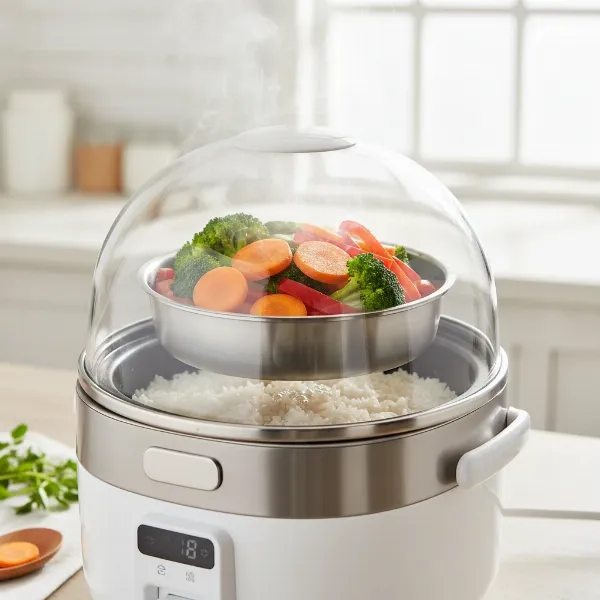 A modern rice cooker with a steaming basket on top, filled with colorful, fresh vegetables like broccoli, carrots, and bell peppers, while rice cooks below.
Method 2: Direct Steaming with Rice (For Specific Veggies)
This method is less common but can be used for certain vegetables, particularly if you want their flavors to meld directly with the rice.
- Mixing Vegetables Directly: For root vegetables like finely diced carrots or sweet potatoes, or even frozen mixed vegetables, you can add them directly into the inner pot with the rice and water at the beginning of the cooking cycle. This works well for infusing flavors but can sometimes result in softer, less distinct vegetable textures. This technique is often recommended for those who wish to blend the vegetables into the rice after cooking.
- Adding Quick-Cooking Veggies on Top: For very quick-cooking items like leafy greens (spinach, bok choy) or frozen peas, you can gently place them on top of the rice during the last 5-7 minutes of the cooking cycle, just before the rice cooker switches to “warm.” Close the lid and let the steam finish them off. This prevents them from becoming overcooked and mushy.
Choosing the Best Vegetables for Steaming with Rice
The key to successful simultaneous steaming is selecting vegetables that cook well with steam and can be timed appropriately with your rice.
Quick-Cooking Vegetables (5-8 minutes):
- Broccoli and Cauliflower Florets: Cut into small, uniform pieces.
- Green Beans and Asparagus: Trimmed.
- Peas and Corn: Fresh or frozen.
- Mushrooms: Sliced or whole small ones.
- Leafy Greens: Spinach, bok choy, kale (add towards the end of the steaming process).
Medium-Cooking Vegetables (8-12 minutes):
- Carrots: Sliced into thin rounds or small sticks.
- Bell Peppers: Cut into strips or chunks.
- Zucchini and Yellow Squash: Sliced or diced.
Longer-Cooking Vegetables (12-15+ minutes):
- Potatoes and Sweet Potatoes: Diced into small, uniform cubes.
- Kabocha Squash: Peeled and cut into small pieces.
- These are best added at the very beginning of the rice cooking cycle if using a steamer basket.
Vegetables to Use with Caution for Direct Steaming: While many vegetables can be steamed, those with high water content or very delicate textures can become overly mushy if left in the direct rice cooking environment for too long. For instance, some sources suggest that broccoli or cauliflower might get soggy if placed directly with the rice for the entire cooking duration, recommending a steamer basket instead. Experimentation and monitoring are your best guides.
Tips for Perfect Steamed Vegetables Every Time
Achieving perfectly steamed vegetables alongside your rice is an art that can be mastered with a few simple guidelines.
- Don’t Overcrowd the Steamer: For optimal steam circulation and even cooking, ensure your vegetables are spread in a single layer within the steamer basket. If you have a large quantity, consider steaming in batches or using a larger steamer.
- Cut Uniformly: Consistency in size is paramount. Vegetables cut into similar dimensions will cook at roughly the same rate, preventing some pieces from being overcooked while others remain raw.
- Monitor Cooking Times: Different vegetables have varying cooking times. Develop a keen eye (and fork) for doneness. Vegetables should be tender-crisp – easily pierced with a fork but still offering a slight bite.
- Season After Cooking: For the freshest flavor, season your steamed vegetables once they are cooked and removed from the rice cooker. A drizzle of olive oil, a squeeze of lemon juice, fresh herbs, salt, and pepper can elevate their natural taste without over-salting the rice or impacting its texture during cooking.
- Experiment with Broths and Seasonings: Instead of plain water, try cooking your rice with vegetable or chicken broth. This will infuse both the rice and the steaming vegetables with richer flavors, making your one-pot meal even more delicious. You can also add aromatics like garlic or ginger to the rice water for an extra boost.
Troubleshooting Common Issues
Even with the best intentions, you might encounter a few hurdles. Here’s how to address common problems when steaming vegetables with rice.
- Mushy Vegetables: This usually occurs from overcooking. Ensure you are removing vegetables promptly once they reach your desired tenderness. For quick-cooking vegetables, try adding them during the last few minutes of the rice cycle. Don’t overcrowd the steamer, as this can also lead to uneven and prolonged cooking.
- Under-cooked Vegetables: If your vegetables are still too firm, they likely needed more steaming time or were cut too large. For harder vegetables, cut them into smaller pieces or add them earlier in the rice cooking cycle. You can also cover them tightly with foil after removing them from the rice cooker and let them rest for a few minutes to continue cooking with residual heat.
- Soggy Rice: If your rice turns out soggy, it might be due to too much water, especially if the vegetables are releasing a lot of moisture directly into the pot (less common with a steamer basket). Ensure you are using the correct rice-to-water ratio for your specific rice type and rice cooker. If using the direct steaming method, be mindful of the vegetable-to-rice ratio.
Conclusion
Steaming vegetables while cooking rice is a simple yet incredibly effective method to prepare nutritious, flavorful meals with minimal fuss. By harnessing the consistent steam of your rice cooker and selecting the right vegetables, you can create a complete, healthy dish that saves time and simplifies cleanup. Whether you’re a busy weeknight cook or simply looking to enhance your healthy eating habits, this technique offers an effortless path to vibrant, tender-crisp vegetables and perfectly cooked rice every time.
Don’t hesitate to experiment with different vegetable combinations, seasonings, and even broths to discover your favorite pairings. What delicious combinations will you create first?
Frequently Asked Questions
Can I steam frozen vegetables with rice?
Yes, you can absolutely steam frozen vegetables with rice. Simply place them in the steamer basket above the cooking rice. They generally cook faster than fresh vegetables and can be added towards the middle or end of the rice cooking cycle, depending on their size and type.
How much water should I use for steaming vegetables in a rice cooker?
When using a steamer basket, the water amount for the rice should be as per your rice cooker’s standard instructions for the rice itself. The steam from this water will cook the vegetables. If you are only steaming vegetables without rice, add 1-2 cups of water to the inner pot, ensuring it doesn’t touch the bottom of the steamer basket.
What if my rice cooker doesn’t have a steamer basket?
If your Rice Cooker didn’t come with a steamer basket, you can purchase a universal stainless steel “flower petal” steamer basket. These are adjustable and designed to fit various pot sizes, sitting elevated above the water. Ensure it fits snugly and allows the lid to close completely.
How long does it take to steam vegetables with rice?
The steaming time for vegetables typically ranges from 5 to 15 minutes, depending on the type and size of the vegetable. Quicker-cooking vegetables like broccoli or peas may only need 5-8 minutes, while harder vegetables like carrots or potatoes can take 10-15 minutes.
Can I put oil or seasoning on vegetables before steaming?
It’s generally best to season steamed vegetables after they are cooked. Adding oil or salt before steaming can sometimes affect their texture or draw out too much moisture. For best results, steam plain, then toss with olive oil, herbs, salt, pepper, or your preferred seasonings just before serving.